remembering plants we’ve loved (and lost), with ken druse
 I WAS CRAWLING around weeding the other day and there it was: yet another turquoise-colored plastic label I knew was from the original Heronswood Nursery near Seattle, which has been closed about 15 years. No plant, just a label. I found three such lonely turquoise labels that day, as I do each spring, reminders of plants I’ve loved and lost.
Yes, plants die, even in the care of experienced gardeners (and others just need to be gotten rid of). Plants we’ve known, but no longer grow for one reason or the other, is the subject today of a conversation with my friend, Ken Druse.
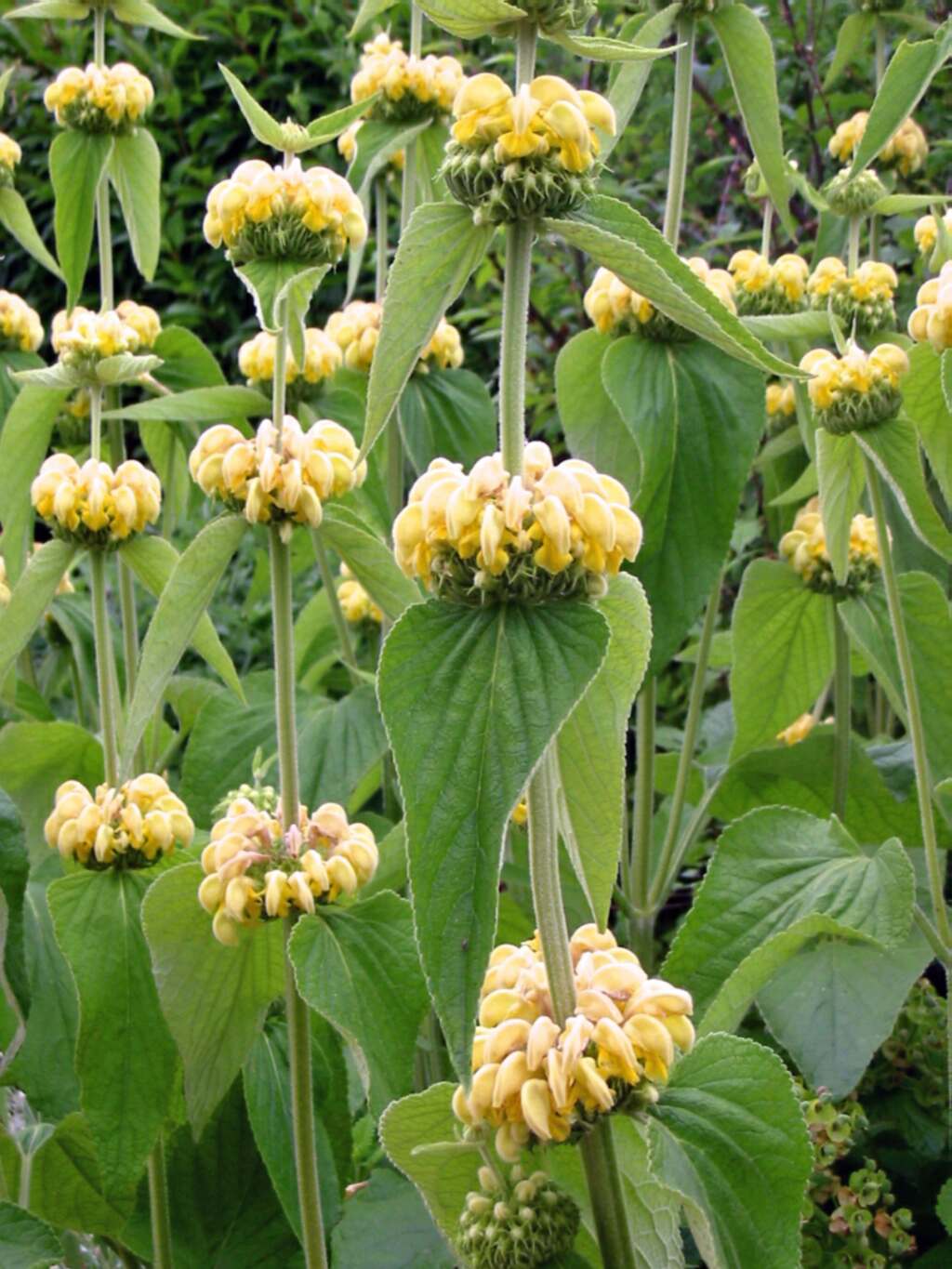
Ken needs no introduction except to say he’s the author and photographer of 20 garden books, including most recently “The Scentual Garden,” about S-C-E-N-T. He joined me via Skype to talk about all the plants we’ve loved before (including Phlomis russeliana, above; photo from Wikipedia). Plus: Tell us in comments at the bottom of the page what plants broke your heart, and that you miss.
Read along as you listen to the June 2, 2020 edition of my public-radio show and podcast using the player below. You can subscribe to all future editions on Apple Podcasts (iTunes) or Spotify or Stitcher (and browse my archive of podcasts here).
plants we knew, and loved, with ken druse
Margaret Roach: Hi, Ken.
Ken Druse: That should be a song, don’t you think? “All the plants I’ve loved before.”
Margaret: Funny you should mention that, and we’re going to play a little clip from our theme song that Willie Nelson was so kind to record with Julio Iglesias for this episode, just for a giggle.
Ken: [Laughter.] Oh, that’s perfect. That’s exactly how I feel. In your introduction you were talking about just turquoise labels?
Margaret: [Laughter.] Yeah.
Ken: There’s so many labels and, I mean, I can’t even talk about it. And Plant Delights Nursery, for example. I think that half of the herbaceous plants I’ve planted or more have died. I have one Oriental poppy and I’ve probably tried to grow, I don’t know, seven, 10 Oriental poppies. In those days we were so intrigued with the latest thing, the newest thing, the untried-and-true thing. A lot of things that we lost weren’t going to be good garden plants, but some of them were. But a lot of them weren’t.
Margaret: Right. And some of them just weren’t tested yet in our areas and so on, and so forth, but we gave it a go. We stretched; we pushed the limits, and gave it a go.
Ken: Just think if we had that money back.
Margaret: [Laughter.] But we had the experience. We got the memories, hon. I remember going to the garden of John Fairey, who died recently, a great gardener in Texas. His garden has been open to the public for many, many years. It was called Peckerwood and now it’s called the John Fairey Garden in honor of him. There were no plants in this one area of this one bed, and it was quite prominent, but there was this aggregation of labels all stuck in the ground-
Ken: [Laughter.]
Margaret: …like soldiers tight together, like a pincushion, but giant. It was hilarious, and it was all the plants that were gone. It was the memory of those plants. It was a graveyard. [Laughter.]
Ken: I used to call mine a mouse graveyard, because then the white labels all lined up looked like little tombstones.
Margaret: Let’s talk about some of them. Actually, you know what? Should I do a poetic reading since we’ve already had some music, should I do a poetic reading?
Ken: This is my favorite poem, I think, ever.
Margaret: It is. It’s by the great Geoffrey B. Charlesworth, also sadly departed, a great gardener. He actually had a garden quite near mine that I visited, that I was lucky enough to visit. He was a leader in the North American Rock Garden Society. Did you ever meet him?
Ken: Yes. Yes, I did.
Margaret: He was wonderful. He wrote this poem called “Why Did My Plant Die?” You’re already laughing.
Ken: [Laughter.] Maybe it’s because you trod on it.
Margaret: Yeah. So, here’s how it goes:
Why Did My Plant Die?
By Geoffrey B. Charlesworth
You walked too close. You trod on it.
You dropped a piece of sod on it.
You hoed it down. You weeded it.
You planted it the wrong way up.
You grew it in a yogurt cup
But you forgot to make a hole;
The soggy compost took its toll.
September storm. November drought.
It heaved in March, the roots popped out.
You watered it with herbicide.
You scattered bonemeal far and wide.
Attracting local omnivores,
Who ate your plant and stayed for more.
You left it baking in the sun
While you departed at a run
To find a spade, perhaps a trowel,
Meanwhile the plant threw in the towel.
You planted it with crown too high;
The soil washed off, that explains why.
Too high pH. It hated lime.
Alas it needs a gentler clime.
You left the root ball wrapped in plastic.
You broke the roots. They’re not elastic.
You walked too close. You trod on it.
You dropped a piece of sod on it.
You splashed the plant with mower oil.
You should do something to your soil.
Too rich. Too poor. Such wretched tilth.
Your soil is clay. Your soil is filth.
Your plant was eaten by a slug.
The growing point contained a bug.
These aphids are controlled by ants,
Who milk the juice, it kills the plants.
In early spring your garden’s mud.
You walked around! That’s not much good.
With heat and light you hurried it.
You worried it. You buried it.
The poor plant missed the mountain air:
No heat, no summer muggs up there.
You overfed it 10-10-10.
Forgot to water it again.
You hit it sharply with the hose.
You used a can without a rose.
Perhaps you sprinkled from above.
You should have talked to it with love.
The nursery mailed it without roots.
You killed it with those gardening boots.
You walked too close. You trod on it.
You dropped a piece of sod on it.
Ken: I’m crying.
Margaret: I just loved him. I just loved him. His books were… “The Opinionated Gardener,” was that what his greatest book was?
Ken: I think so.
Margaret: That was the name of it.
Ken: You mentioned rock gardens—rock gardeners, they like to be punished. [Laughter.]
Margaret: They try the hardest plants of all. They have a high death rate.
Ken: The hardest plant. They grew plants from seed and, oh my gosh, I can’t even keep a Dianthus alive more than one year.
Margaret: Right. Yeah. So, let’s-
Ken: So, who’s dead? [Laughter.]
Margaret: Yeah. Killed any plants lately over there, hon?
 Ken: No, I was thinking about over the years, it’s hard to remember because they’re not here. You look and you think, what? But I was thinking and I remember I had a collection of oakleaf hydrangea and my favorite was ‘Snowflake,’ which is a semi-double, well, it’s double really. It was about 6 feet tall and I’d discovered after Hurricane Irene that Hydrangea quercifolia is flood-intolerant. I lost them all. Every one. [‘Snowflake’ flower detail, above.]
Margaret: Oh.
 Ken: Yep. Just recently I got a text from my friend Heidi, and it had a photograph of something blooming in it. It was my favorite Siberian iris, which is a kind of short one called ‘Summer Sky’ from 1935. I had that plant for about 40 years, but when I planted it here it got a little shady, but it also got borer, and I lost it.
The thing about that is if you don’t hoard plants, and it was hard for me, I got that from someone from an old garden, because it’s not easy to… Well, now it’s a little easier to find, but it wasn’t then at all. It’s sky blue and white, just beautiful. Now I can get it back, because I shared that plant. [‘Summer Sky’ iris is sold by Tranquil Lake Nursery. Ken’s photo of it, above.]
Margaret: I was thinking about a rose that I grew for many years. It’s a rambler, purple-colored rambler. ‘Veilchenblau’ I believe you say? ‘Veilchenblau’?
Ken: That’s how I say it.
 Margaret: Yeah. I can just see the place. I mean, I can see out the window, the place where it stood all those years, where it grew all those years. I think, I don’t even know what… I don’t even know if I remember what befell it. [Laughter.] But I keep wondering, like with your iris, why don’t I have it again? Why didn’t I replace it right away? It was just so beautiful. [Flower detail above from Wikipedia. And Annie’s Annuals nursery sells ‘Veilchenblau.’]
It was a feature in the flower garden at Wave Hill. That was the first place I had seen it; in New York City. I had gotten it because I was so enchanted by it there. That’s a plant, I don’t know if I killed it. I’m not going to be sure about that one—a distant memory.
Ken: Some things this year are on their way out, and we had a mild winter, but we didn’t have snow. There’s two Robinia, which are black locust, and they’re both dying. They’re not in the same place. I don’t know what it is. We need some plant forensics sometimes, I think.
Margaret: Now, is that Robinia pseudoacacia?
Ken: Yes.
 Margaret: Yes. And so, I had the one ‘Frisia,’ the gold-leafed one, and I tried it several times. I have locust borer in this area that especially loves to use the flowers of goldenrod as well; I find them in late summer and early fall here in the goldenrod fields [above].. But it just tore through that plant Robinia. I couldn’t grow them at all. It’s not even native [in my precise area]. It’s been naturalized, the regular black locust.
Ken: Oh, really?
Margaret: Yeah. It’s not native to this part of the country. It’s moved.
Ken: Oh, but it’s North American.
Margaret: Yes, but not to where I am. It did a little too well as it moved [laughter], and it’s taken over a lot of areas. A lot of people think of it as a weedy tree. But at any rate, the gold-leaf form, the more horticultural kind of garden-y form, it couldn’t stand up to the borer.
 Ken: Well, I’m looking out the window right now at a Cornus controversa that’s in bloom. I mean, we call it Cornus controversa, it’s a dogwood, but the common name, I guess, is either giant dogwood, even though it’s not giant, or wedding cake—because it has branches and tiers. Many years ago, when I knew I was going to buy this property in New Jersey and I still had the house in Brooklyn, I was desperate for this plant that I think Heronswood sold [laughter], or someplace like that. I bought one and a squirrel ate it down to about 2 inches, and I was heartbroken. So I bought another one from a nursery. I won’t mention the name of the nursery, a dubious nursery. [Variegated Cornus controversa at Ken’s, above.]
Margaret: Uh-oh.
Ken: It said 15 gallons, and I thought that’s really a good-size plant. It was expensive, but hey, 15 gallons. And a 15-gallon pot came with a 6-inch plant.
Margaret: Oh my goodness. You basically bought a lot of soil, didn’t you?
Ken: And it died, because it was over-watered. And then a friend of mine, John Beirne, gave me one. He may have given me that first one that the squirrel ate. I had three altogether, and now I’m looking at one that’s about almost 15 feet tall, and it’s the squirrel one. Now it’s kind of straight, but even until very recently, you could see a little bump [laughter], a little turn, how they get a dog leg.
Margaret: A nubbin.
Ken: Right. The one that survived and is variegated was the one that the squirrel ate.
Margaret: Oh, so it’s controversa ‘Variegata’? Is that what it is? Yeah, I think I croaked one of those myself over here. [Laughter.] I used to have a lovely one.
Ken: There were three or four at White Flower Farm fext time I was there, there was one, and it was giant. That’s in your neighborhood sort of-
Margaret: Yeah. And things change. If I look around here compared to 30, 35 years ago, whenever I arrived here and started gardening—tentatively at first and then more lustily—a lot of the big trees that surround my property and the few that were on the property itself, near the house and so forth, they’re a lot bigger than they used to be. And all those shrubs I planted in the beginning that were, as you say, a little thing in a big pot from the mail-order nursery or whatever, well, they’re big, too.
So the light conditions have changed and the competition at the root level, especially for those perennials we were lamenting before who have to try to duke it out for moisture and nutrients and also for light in among tree roots and so forth, it gets tough. The going gets tougher, right? The assets are diminished in some cases when your canopy trees get bigger. A lot of things just don’t like it anymore, I think, is one thing. And then floods is another thing. [Laughter.]
Ken: I’m thinking as you’re saying. Because I think I’m having more success, but I’m also shopping less [laughter], so maybe that doesn’t count, because there’s no room. Now I’m gardening with a shoe horn. I used to garden with a spade.
Margaret: Right. I loved a couple of perennials that I still miss. Again, why don’t I get them again? They’re available. Why don’t I get them again? Phlomis—did you ever grow Phlomis? [Photo, top of page.]
Ken: I kept Phlomis alive for about 12 months. It’s too shady here. I’ve got drainage, but I don’t have enough sun, because that’s really… Is that Mediterranean?
Margaret: It is. It’s from, I want to say Syria, like the mountains of Syria. The common name is hardy Jerusalem sage. I don’t know particularly why, but… It’s not exactly from our type of a place, but I grew it for years and years in my… It’s Zone 5 hardy. To see if we can explain what it looks like to people-
Ken: Well, it has a fuzzy leaf, which is maybe why they say sage, maybe.
Margaret: Yeah, silvery almost. A little grayish, felted. Yeah?
Ken: And the flowers are… Talk about tiers. There’s the one line of flowers and the next one, and the flowers are sage-y kind of. Like parrot’s beaks.
Margaret: Yeah, but they’re arranged in what would be called a whorl. I also think they look like spaceships. You know what I mean? Monarda is like that kind of, but it’s more complicated looking than Monarda, but it looks like a mint relative, right?
Ken: Mm-hmm.
Margaret: Anyway, it’s a wonderful plant. I can’t believe I don’t have it anymore. Why didn’t I get it? Why aren’t I getting it? I know-
Ken: It’s a beautiful color, too, but I just today saw that there’s a white one, and now everybody wants a white one, but why would you… I mean, the color is-
Margaret: Yellow. It’s yellow, right?
Ken: It’s a mustardy yellow. It’s a really nice yellow.
Margaret: Yeah. Phlomis russeliana. High Country Gardens sells it [note: sold out now for spring 2020]. I believe I got my original plants from Well-Sweep Herb Farm nearer to you in New Jersey, which still exists, but no longer sells that plant I don’t think. So that’s one.
Then Crambe nearby it in the front yard, I also had Crambe cordifolia.
Ken: I killed that, too.
Margaret: It’s like a big Brassica kind of a thing and it looks like a giant bouquet of baby’s breath, and when I say giant, I mean many feet across.
Ken: It’s like kale, and then it bolts in this frothy, feathery cloud.
Margaret: Yeah. So why didn’t I keep that thing? I had it for years. Who knows. It probably got run over by all the shrubs growing in. Do you know what I mean?
Ken: You trod on it. You threw a piece of sod on it.
 Margaret: I did. I’m sorry, I’m sorry. [Laughter.] And then, I came across as I was crawling around the other day and finding Heronswood labels, I also came across one plant of Lathyrus vernus, a little perennial pea [above]. Very small. Have you ever grown that, Lathyrus vernus?
Ken: I have that. I have the species and the pink one. They’re little clumps and I’ve got to divide it, because Linc Foster, did you ever hear of Linc Foster?
Margaret: Sure, speaking of rock gardens and so forth.
Ken: He had a naturalized area of it, but it was very wet. I’m thinking about that, because I just have it in a garden bed and it doesn’t get any bigger, but I love that. Oh my gosh. It’s so pretty.
Margaret: So early, a little mound of a thing, arching stems, small, often purple—pea type flowers. Lathyrus is a sweet pea, but this is a little perennial one. Purple. As you said, there’s also a pink version and it’ll self-sow around if it’s happy. How do I only just have one now, I had dozens of them?
Ken: The color is sort of ombre. It goes from almost bluish to pinkish flowers, but they don’t last long enough.
Margaret: Yeah. So that’s another one that I-
Ken: Think of all the things that we grow that have flowers that lasts a day. Are we crazy?
Margaret: Well, there are many reasons. There’s a long checklist of things that are crazy about us. [Laughter.] That’s not the only one, hon.
Ken: They don’t call it daylily for nothing.
Margaret: Yeah. There you go. What else? Any other that you’re missing?
 Ken: I’ve tried to grow rhubarb three times, and I have kind of a soft rule: three strikes and it’s out. First I tried the ornamental rhubarbs, because they’re so spectacular, and they look so good in the right climate, not here. But then I tried to grow regular rhubarb. I think I actually tried that twice. I can’t grow it. It just doesn’t come back.
But do you think that’s acid, because a lot of my problems are that it’s a little alkaline here, and I think almost everybody wants, except lilacs, everybody wants it more like a little to a lot acidic. I’ve got a couple of rhododendrons that have been one foot tall for 25 years. I think I’ve been acidifying the soil with sulfur for years, and now they’re starting to grow a little bit.
Margaret: Oh, interesting.
Ken: I think that’s one of my problems.
Margaret: Right. That’s not in the poem. Well, maybe that was in the poem. [Laughter.]
Ken: Yeah, too much lime, but that’s rock gardens.
Margaret: Yeah. Now, rhubarb is one thing that I’ve always had and I still have, and it keeps getting bigger and bigger and bigger and bigger. And I just-
Ken: It loves cold.
Margaret: Yeah, and I just attribute it to a good organic soil, a soil that lots of compost has been put on every year. And it’s a soil I can dig in with my hands and it’s moisture retentive without being wet. It’s doesn’t bake.
Ken: But you wouldn’t think it would disappear, though.
Margaret: No, not necessarily. No. Huh. [More on what rhubarb likes to thrive in the box near the bottom of the page.] Well, in the last few minutes, are there-
 Ken: Well, I finally have been successful with a plant. I’ve wanted to grow… You won’t remember this, but I think we saw this plant in North Carolina, which is where it’s native to, Diphylleia cymosa? [Photo above by Ken Druse.]
Margaret: Oh yes, I have it.
Ken: Oh. I love that plant. It has nice flowers, beautiful umbrella leaves, and very beautiful berries, that I think they’re bluish-
Margaret: They’re blue, yeah.
Ken: …with magenta petioles holding them. The berries are really cool. I wanted to grow that, and I wanted to grow that, and I wanted to grow that. I’m now successful. This is my third year in a new place. So sometimes, it’s the place.
Margaret: I agree.
Ken: Maybe don’t give up if you can replace it, like you’re going to replace your Phlomis, and just try it in a different spot. I thought it wanted wet, and maybe it didn’t. Everywhere here has good drainage, so it’s not that. But now I just have it in sort of a garden bed and everything’s very sandy here. That’s what they always say. They want rich soil that’s fast-draining. [Laughter.] I’ve got sand, which is better than clay for moisture, but now I have my Diphylleia cymosa and it looks like a plant.
Margaret: Yeah. It’s a beautiful bold-leafed creature. It’s gorgeous.
Ken: Does that have a common name?
Margaret: I don’t think so.
Ken: Blue twin leaf or something?
Margaret: No, I don’t have any idea. Bill Noble, formerly of the Garden Conservancy who has a brand new book out, he’s going to be a guest on the show in a couple of weeks. Bill Noble grows it in Vermont, I want to say, beautifully, like incredibly beautifully. We should ask him for the tips on that.
Ken: Well, I thought it was too cold here, so I guess not.
 Margaret: No, not at all. No, not at all. Not at all. I just have to put in, before we run out of time, I have to put in just a word for: there are some plants that I would like to have die, please. Very much, thank you. Number 1 on that hit parade is the chameleon plant, Houttuynia (or however you say it) cordata. I mean, nightmare plant. Horrible, horrible, horrible [detail above].
Ken: Did you plant it? I guess you did because it wasn’t there.
Margaret: Sure. I planted it, because it was “the thing.” It was the plant of the moment at a moment there.
Ken: I didn’t plant it and it’s here.
Margaret: Oh, lucky you. Oh, I’m sorry. I didn’t know that. I didn’t know that.
Ken: Do you have a native plant that’s a thug?
Margaret: Well, hmmm, probably.
Ken: I’ve got Anemone canadensis.
Margaret: Yeah, no, I don’t have that. Oh, interesting. Interesting.
Ken: Well, that can happen.
Margaret: All right. Well, what we’re going to do in closing is we’re going to have Willie and maybe Julio will sing us out [laughter].
Ken: Sounds good.
Margaret: To all the plants I’ve loved to before, that traveled in and out my door.
Ken: Right. Don’t trod it on it.
Margaret: Don’t trod on it. Right. That’s good advice, actually.
Ken: Don’t trod on me.
Margaret: Don’t trod on me. All right, I’ll talk to you soon. Thank you for recalling-
Ken: Thank you, Margaret.
Margaret: … some of our loved ones that we can rekindle.
Ken: Gone, but not forgotten.
Margaret: Not forgotten, indeed. I’ll talk to you soon, O.K.
more about ken’s rhubarb question
rhubarb’s preferences
- A deep, fertile organic soil
- Slightly acid soil is ideal, pH 6.2-6.8
- Avoid a soggy spot, and also avoid sandy soil that drains too fast
- Afternoon shade in the warm end of its hardiness range (it’s hardy in Zones 3-7, with trickiness even in parts of 7 and anywhere warmer–so cool zones are easier with this one, that hails from Siberia)
- A straw mulch and regular watering may also help keep the ground evenly moist in hot-summer areas
- 500 hours of winter chill (temperatures from 30ish to 45ish degrees)
- Growing rhubarb as an annual in the hottest Zones, from Southern Exposure Seed Exchange
- Growing rhubarb, from Minnesota Extension
- Growing rhubarb, from Tennessee Extension

prefer the podcast version of the show?
 MY WEEKLY public-radio show, rated a “top-5 garden podcast” by “The Guardian” newspaper in the UK, began its 11th year in March 2020. In 2016, the show won three silver medals for excellence from the Garden Writers Association. It’s produced at Robin Hood Radio, the smallest NPR station in the nation. Listen locally in the Hudson Valley (NY)-Berkshires (MA)-Litchfield Hills (CT) Mondays at 8:30 AM Eastern, rerun at 8:30 Saturdays. Or play the June 2, 2020 show using the player near the top of this transcript. You can subscribe to all future editions on iTunes/Apple Podcasts or Spotify or Stitcher (and browse my archive of podcasts here).